 >
>


Product overview of the C3225CH2E473K250AA TDK ceramic capacitor
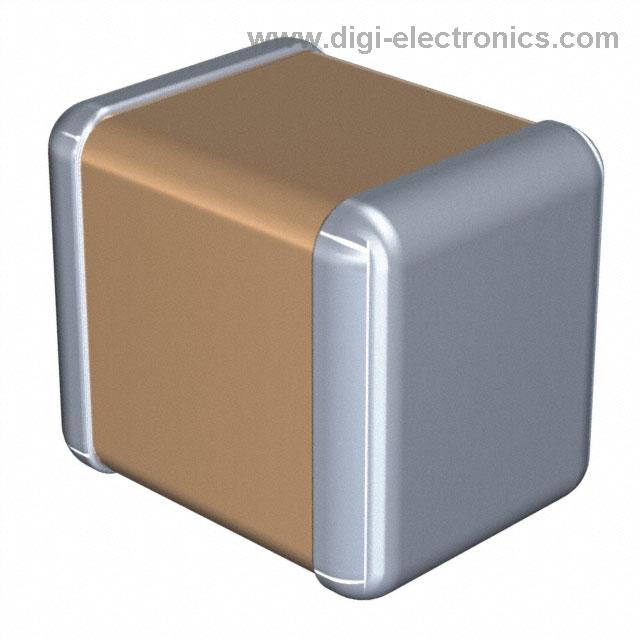
The C3225CH2E473K250AA ceramic capacitor from TDK exemplifies the intersection of advanced materials engineering and stringent commercial requirements in multilayer ceramic chip capacitor (MLCC) design. Fabricated for mid-voltage electronic circuits, its rated voltage of 250V enables robust performance in power management, signal filtering, and decoupling functions, particularly within modern control systems. At the core of its electrical behavior lies a stable CH dielectric, a formulation optimized for consistent capacitance and minimal variation under voltage stress, temperature gradients, or AC ripple conditions. This intrinsic stability, together with the capacitor’s ±10% tolerance at a nominal capacitance of 0.047μF (47nF), ensures effective attenuation of high-frequency noise and transient suppression, crucial in densely populated PCBs with fast-switching digital or analog domains.
The physical footprint adheres to the 1210 (3225 metric) SMD specification, facilitating automated placement during assembly and supporting high component density without sacrificing voltage standoff or reliability. The internal configuration leverages multilayer stacking, increasing electrode surface area and achieving higher capacitance per volumetric unit. This geometry reduces equivalent series resistance (ESR) and minimizes parasitic inductance, enhancing pulse response in high-speed switching applications such as DC-DC converters and low-impedance decoupling nodes. Through iterative design validation and process monitoring, durability under repetitive thermal cycles and mechanical loads is reinforced, contributing to long operational life in environments such as industrial controllers and commercial power modules.
Integration flexibility is central to the C series MLCC lineup, with the C3225CH2E473K250AA supporting a range of topologies—from single-point decoupling beneath high-performance ICs to distributed filtering across input/output power rails. The MLCC’s compactness empowers designers to optimize trace lengths and minimize loop areas, directly impacting electromagnetic compatibility and system-level reliability. Strategic selection of this capacitor in practical circuits has demonstrated measurable improvements in noise margin and voltage stability, especially when deployed in multi-layer board architectures where mitigating dielectric losses and thermal hotspots is paramount.
Future-oriented design increasingly hinges on the holistic adoption of reliable passive components with scalable voltage ratings and tight tolerances. The C3225CH2E473K250AA, by encapsulating these attributes within a standardized package, reinforces best practices in circuit protection and analog integrity. When balanced against competing polymer or tantalum capacitor choices, this MLCC reveals an edge in stability and failure rate—criteria that continually streamline engineering workflows for high-volume commercial electronics. The strategic deployment of such capacitors thus becomes an enabler of streamlined electronic platforms that prioritize space efficiency, operational resilience, and component harmonization across diversified system requirements.
Key features and technical specifications of the C3225CH2E473K250AA
The C3225CH2E473K250AA is engineered for versatility in both industrial and consumer circuit environments, presenting a blend of voltage rating, capacitance precision, and dimensional compactness. The component’s rated voltage of 250V DC positions it to withstand moderate transient spikes and sustained mid-high voltage conditions in power management and signal conditioning scenarios. Its capacitance value of 47nF, with a tolerance of ±10%, satisfies the requirements for decoupling applications in digital and mixed-signal systems, where stable charge reservoirs are essential for filtering supply noise and preserving signal fidelity.
Dimensional efficiency is achieved with the 1210 form factor (3.2 × 2.5 mm), supporting high-density board designs without compromising solderability or automated assembly throughput. This compact footprint enables strategic placement near noise-sensitive nodes, minimizing parasitic elements and improving electromagnetic compatibility in multilayer layouts. The CH dielectric delivers reliable performance across moderate temperature swings, making it well suited to circuits exposed to everyday operational variances but not extreme thermal challenges. Here, material stability is critical for preserving capacitance characteristics throughout repetitive thermal cycles and extended operational lifetimes.
Adherence to IEC capacitance coding standards ensures straightforward integration into standardized BOMs and cross-referenced validation routines. This systematic compliance streamlines qualification for diverse platforms and ensures parameter consistency across production volumes, reducing the risk of system-level unpredictability. Within decoupling and smoothing circuits, the C3225CH2E473K250AA demonstrates low equivalent series resistance (ESR) and minimal dielectric absorption, thereby reducing energy losses in high-frequency operations such as switch-mode power supplies and motor drive inverters.
Practical deployment repeatedly yields low failure rates, attributed to TDK’s material selection and process controls—especially relevant for applications involving repetitive surges or where dielectric fatigue can degrade performance. In snubber and resonant topologies, the device’s electrical robustness and tight tolerances are leveraged to suppress voltage transients, shape switching profiles, and mitigate oscillatory artifacts, directly impacting the durability and reliability of insulated-gate bipolar transistor (IGBT) and MOSFET switching blocks.
Comparatively, the mid-voltage MLCC class, spanning 100V–630V, accommodates up to 22μF in specific cases, but the chosen 47nF value achieves a distinctive balance: low bulk for minimal charging delay and manageable reactance, with sufficient energy storage to fulfill a wide set of design intents without introducing layout penalties. This capacitive regime is particularly effective at filtering high-frequency ripple and managing localized spikes in isolated power domains or sensitive analog front-ends.
The C3225CH2E473K250AA epitomizes a holistic approach to multilayer ceramic capacitor design: optimizing electrical stability, volumetric efficiency, and standardized integration pathways. Such components become foundational in architecting noise-resistant, reliable modules across automotive electronics, industrial automation, precision instrumentation, and advanced consumer platforms. The synergy of mechanical robustness and electrical exactitude ensures sustained signal integrity, streamlined assembly processes, and lifetime predictability—hallmarks of well-engineered passive components.
Device structure and manufacturing insights of the C3225CH2E473K250AA
The C3225CH2E473K250AA exemplifies a robust multilayer ceramic capacitor architecture, utilizing a systematic arrangement of ceramic dielectric strata and internal electrodes. The device is fabricated via monolithic processing, which promotes the seamless integration of these layers. This production methodology yields a dense, mechanically resilient structure, well-adapted to the demands of modern electronics manufacturing, including surface-mount technology lines and automated pick-and-place operations. Mechanical reinforcement inherent to the multilayer configuration safeguards against cracking during board soldering and exposure to mechanical stresses over extended lifecycles. Repeated empirical observations confirm minimal change in electrical parameters even after rigorous thermal cycling and vibration tests, underscoring the device’s suitability for reliability-driven designs.
At the material level, advanced ceramic dielectrics such as CH-class compositions enable stable capacitance over a broad temperature and voltage envelope. Such dielectric choices directly translate into reliable energy storage and insulation properties within compact footprints. The alternating electrode system, commonly realized through high-purity nickel or similar alloys, ensures low equivalent series resistance and minimal parasitic inductance. This internal geometry supports the rapid charge and discharge cycles required in high-frequency filtering applications, particularly in densely populated signal and power rails. Devices of this category consistently demonstrate low insertion loss and effective attenuation of GHz-range noise, verified across board-level electromagnetic compatibility (EMC) assessments.
Batch-to-batch uniformity is a consequence of process-controlled layering and sintering, yielding precision tolerances in both electrical and physical dimensions. This consistency enables efficient circuit design and predictable performance, reducing the need for extensive qualification at the application level. Compliance with environmental directives—such as RoHS—is achieved through the elimination of lead and adoption of safe component finishes, all while maintaining solderability and integration with reflow profiles common in advanced PCB assembly processes.
From a practical deployment perspective, the compact surface-mount device format of the C3225CH2E473K250AA offers flexibility for miniaturized layouts, aligning circuit density with thermal and electrical management goals. The device's form factor, coupled with its resilience and frequency characteristics, make it an optimal choice for designers targeting high-speed data, precision analog filtering, and power integrity across consumer, automotive, and industrial sectors. The layered approach seen in this capacitor forms a blueprint for achieving convergence among electrical performance, manufacturability, and regulatory conformance—a central principle for next-generation component engineering.
Application scenarios and engineering considerations for the C3225CH2E473K250AA
The C3225CH2E473K250AA, a mid-voltage multilayer ceramic capacitor (MLCC), assumes a critical role in precision electronic architecture. Its inherent characteristics—such as stable capacitance under fluctuating supply voltages and robust voltage endurance—allow seamless integration into a diverse range of mid-voltage circuitry. Each deployment context dictates nuanced engineering choices, increasingly influenced by the capacitor’s material properties, physical structure, and manufacturer specifications.
The capacitor’s optimal performance in decoupling and smoothing tasks arises from its Class II (CH) dielectric, balancing volumetric efficiency with satisfactory temperature and DC bias stability. In power management environments, low equivalent series resistance (ESR) and minimal impedance across switching frequencies are paramount, suppressing transient voltage spikes and stabilizing downstream loads. Real-world circuit topologies reveal that careful strategic placement near sensitive ICs and filtering nodes yields reduced ripple and enhanced signal integrity. In EMC-intensive designs, matching capacitance to anticipated noise spectra is essential for effective suppression, while multi-point ground referencing can further attenuate common-mode disturbances.
The device frequently serves in snubber and resonant loops for inverter and motor drive stages, owing to its 250V rated voltage. Selection parameters extend beyond headline voltage; pulse tolerances and dissipation factors warrant scrutiny under fast-switching regimes. Empirical assessment of thermal rise and voltage derating under sustained operation informs safe margins. For resonant applications, predictable frequency response and low loss tangent contribute to tightly maintained oscillation and improved conversion efficiency, especially in wireless charging or DC-DC converter modules. Fast assembly cycles benefit from its surface-mountable 3225 footprint, facilitating automated high-mix production.
Application suitability is modulated by documentation: this MLCC is targeted toward general-purpose electronics—such as A/V systems, communication hardware, industrial robotics, and office instrumentation—where functional resilience is vital but not mission- or life-critical. Engineers must recognize the boundaries imposed by absence of extended qualification for automotive, aerospace, or high-rel sectors. Design for protection is pivotal. Incorporation of soft-start and fault containment strategies, such as current limiting and thermal sensing, can preempt overstress events. For systems with power cycling or unpredictable load dynamics, fail-safe topologies, including parallel redundancy or localized electronic fusing, mitigate circuit-level risk.
Mounting integrity and capacitance consistency are functions of board layout, reflow profiles, and solder composition. Practical case studies illustrate variation in capacitance loss post-soldering; minor shifts are traceable to mechanical strain and localized heating, underscoring the value of simulation-based thermal modeling prior to final placement. Pre-production sampling under representative operating profiles—such as environmental chamber stress or vibration testing—validates real-life tolerance, particularly for applications exposed to cyclical or mixed-mode stress.
Effective collaboration with component suppliers yields decisive advantages. Data sheets, while comprehensive, are best supplemented by direct engagement with TDK technical liaisons for interpretation of nuanced parameters: temperature coefficient, tolerance stack-up, and maximum recommended torque during mounting. Such dialogue supports precise matching of capacitor properties to the target application per delivery batch.
Architecting for reliability with the C3225CH2E473K250AA thus involves layered decision-making, from atomic-level dielectric response characterization through to whole-system fault modelling and production process optimization. Integrating the capacitor into a well-protected, tightly regulated circuit environment supports not only immediate electrical objectives but also long-term system resilience and manufacturing reproducibility. Emphasizing informed engineering practice, grounded in empirical and collaborative experience, can enable sustained performance under evolving operating conditions.
Selection guidance within the TDK C series and related package sizes
The TDK C series offers an extensive range of MLCC solutions, optimized for diverse applications through precise alignment of capacitance, voltage rating, and case size. The series architecture is engineered to address both space constraints and performance parameters by providing a spectrum of package sizes. Each case designation—ranging from C1005 (0402) up to C5750 (2220)—maps directly to corresponding electrical and spatial characteristics. This modular approach enables efficient voltage and energy storage scaling based on application criticality.
Underlying electrical characteristics are influenced by both ceramic material class and physical dimensions. Class I dielectrics (such as CH or NP0) exhibit stable capacitance under varying temperature and voltage, making them preferable in signal path filtering and precision timing circuits. Larger cases such as C4532 or C5750 accommodate increased dielectric volume, supporting higher capacitance values at given voltage ratings—an essential factor for bulk energy storage and power line filtering in high-current designs. Conversely, the C1005 and C1608 packages emphasize ultra-compact footprints and are typically specified where high component density and minimal parasitic inductance are prioritized, such as in high-frequency RF modules or densely populated multilayer PCBs.
The C3225CH2E473K250AA, within the C3225 (1210) package, epitomizes the balance between form factor, capacitance (47 nF), and 250 V working voltage. This configuration is frequently deployed for decoupling ASICs, microcontrollers, and high-speed digital logic from voltage transients, offering a robust compromise where both effective noise suppression and moderate board space consumption are required. Its physical size ensures sufficient surface area for reliable solder joints and improved thermal dissipation, mitigating cracking risks during automated placement and reflow—a recurring reliability consideration in volume manufacturing environments.
Selection requires evaluating trade-offs between electrical robustness and footprint. High-speed power delivery networks often leverage mid-size packages (C2012 to C3225) to limit voltage drops and facilitate EMI attenuation without sacrificing precious PCB area. In contrast, power conversion circuits demanding bulk decoupling or surge absorption in automotive or industrial environments may necessitate the high capacitance density of C4532 or C5750. Careful attention to DC bias effects is warranted: as voltage increases, capacitance can drop substantially, especially for higher-K dielectric types in smaller packages. Measurements in test setups using real-world voltage rails often highlight these losses, underscoring the importance of derating and selecting larger packages where possible.
Thermal and mechanical resilience are often underappreciated selection factors. During board assembly, larger bodies offer superior resistance to flex cracking, while compact cases mitigate self-heating during high-frequency operation due to smaller ESR and ESL profiles. Strategic package choices aligned with end-use scenarios—such as mobile device RF bypass, industrial PLC decoupling, or automotive ECU filtering—provide a significant contribution to long-term reliability and optimal signal integrity. Selecting the appropriate C series MLCC thus entails a holistic assessment across electrical, mechanical, and process-level variables, achieving robust performance even as design constraints intensify.
A nuanced approach—factoring in not only nominal specifications but also real-world behaviors—enables precision tuning of power and signal integrity, especially as system-level integration and demands on board area continue to escalate. When maximizing both reliability and functionality, the methodical choice and placement of C series MLCCs, exemplified by the carefully balanced C3225CH2E473K250AA, are central to advanced electronic design strategies.
Potential equivalent/replacement models for the C3225CH2E473K250AA
Evaluating equivalent or replacement options for the C3225CH2E473K250AA requires a systematic approach anchored in electrical, mechanical, and procurement criteria. The primary specification—1210 SMD, 0.047μF, 250V, Class II dielectric—serves as the foundation for cross-comparison. Investigating within TDK’s C series, leveraging dielectric options such as C0G, X7R, and X5R enables targeted optimization. For instance, prioritizing C0G yields improved stability under varying thermal loads, while X7R and X5R introduce higher volumetric efficiency at the cost of increased capacitance drift, which must be aligned with the circuit’s permissible variation envelope. Tolerance grades further influence passive component selection, impacting bias-dependent behavior, particularly in high-frequency or precision analog contexts.
Form factor flexibility opens additional paths for value engineering. Downsizing to C3216 (1206) may facilitate PCB densification, reduce assembly issues related to pad stress, and align with automated placement capabilities. Alternatively, upscaling to C4532 (1812) could enhance mechanical robustness or thermal cycling reliability, which is relevant in high-vibration or thermally dynamic environments. Each size adjustment triggers a review of reflow profile compatibility and mounting stress absorption, especially if existing board layouts are tightly constrained.
Sourcing equivalents from alternate manufacturers such as Murata, Samsung Electro-Mechanics, or AVX demands a detailed matching process. Strict adherence to dielectric type, EIA size code, rated voltage, and capacitance tolerance is required, extending to verification of temperature coefficient, dissipation factor, and insulation resistance in the candidate’s datasheet. Emphasizing supplier track record, batch consistency, and process controls is essential to maintain board-level reliability, especially in mass production or safety-critical assemblies.
Integration experience underscores the significance of quality documentation and proactive communication with supplier field application engineers. Subtle differences in dielectric aging rates or DC bias characteristics between part numbers from different vendors often manifest under accelerated life testing. Early bench qualification can preempt latent failures downstream, minimizing requalification expense and field return risk. Internal process documentation should reflect substitutes’ validation, capturing test data and pilot build outcomes for future audits.
Strategic substitution is not merely a spec-matching exercise; it is an opportunity to bolster supply chain resilience while enabling design iteration. By viewing cross-referencing as a platform for continual performance and cost trade-off assessment rather than a single-sourcing contingency, design teams maintain flexibility amid evolving market and component availability pressures. In practice, a disciplined, criteria-driven approach streamlines transitions and sustains quality without compromising design intent.
Conclusion
When assessing the TDK C3225CH2E473K250AA for integration into electronic platforms, it is essential to examine its technical merits alongside its practical adaptability within project constraints. This component utilizes a multilayer ceramic architecture with high reliability, enabling stable performance under mid-voltage operating conditions. The 3225 metric SMD footprint aligns with widespread manufacturing standards, streamlining both initial assembly and future rework scenarios. Such form factor consistency can minimize layout revisions, particularly beneficial in design cycles where board real estate and routing flexibility are constrained.
Functionally, the C3225CH2E473K250AA excels in mid-voltage filtering, energy storage, and decoupling roles, leveraging a CH dielectric system that maintains capacitance stability over temperature and bias. Its 47μF rating supports robust charge/discharge cycles and effective noise suppression, critical in switching regulator outputs, processor power rails, or analog front-end buffering. Engineers can count on its ripple absorption characteristics during transient events, which translates to improved overall system reliability in densely populated PCBs.
TDK’s extensive C series portfolio provides substantial supply chain assurance—standardization across package types and electrical specs mitigates risks associated with sourcing disruptions or lifecycle transitions. For procurement teams, maintaining up-to-date records of catalog evolutions and cross-referencing part availability with target specifications allows for responsive component management. Design revisions or expansions benefit from this ecosystem by facilitating rapid BOM adjustments without sacrificing qualification confidence.
It is advisable to establish feedback loops between design simulations and post-assembly performance data, ensuring that capacitance and ESR values consistently meet in-circuit expectations, especially as system-level power demands scale or thermal environments fluctuate. In practice, nuanced differences in impedance, aging profiles, and mounting surface conditions may manifest across production runs—pre-emptive validation against specification sheets and real-world prototypes should become standard protocol.
Through judicious selection and ongoing validation, the C3225CH2E473K250AA offers a balance of electrical robustness, mechanical compatibility, and sourcing reliability that directly contributes to maintainable and scalable electronic systems. Such components not only support immediate technical objectives but also underpin lifecycle management strategies for both new designs and field upgrades within diversified deployment contexts.