>
>


Introduction to the DMP6050SSD-13 Dual P-Channel MOSFET
The DMP6050SSD-13 exemplifies the evolution of discrete power switching, built as a dual P-channel MOSFET by Diodes Incorporated. The device stands out with a 60 V drain-source voltage rating and supports continuous drain currents up to 4.8 A per channel, matching the requirements of densely integrated power architectures. This specification enables reliable operation under fault conditions and extends its operational envelope for both primary and secondary side switching duties in complex power rails.
At the core of the DMP6050SSD-13's efficiency is its remarkably low on-state resistance (R_DS(on)), achieved through advanced silicon processing and careful cell geometry optimization. Lower R_DS(on) values directly reduce conduction losses, a critical advantage for systems where thermal management dictates circuit density and form factor. The dual-channel integration simplifies PCB layout, reducing parasitic inductance and enabling more predictable high-speed switching behavior, particularly important for synchronous rectification and load-side switching in point-of-load regulator topologies.
Switching performance is enhanced by a balanced gate charge profile, permitting swift turn-on and turn-off without unacceptable voltage overshoot or EMI issues. Empirically, this characteristic allows engineers to deploy higher switching frequencies, shrinking the size of associated passives and thus the overall solution footprint. The DMP6050SSD-13’s P-channel configuration circumvents the need for additional gate-drive circuitry in high-side applications, minimizing design complexity and component count—a strategic benefit in space-constrained IoT nodes and thin-client computing platforms.
Practical circuit design often highlights the DMP6050SSD-13's tolerance to voltage transients and its ruggedness during repeated hot-plug events. The device maintains stable operation despite variable load steps and input surges, as seen in backlighting control modules where white LED currents fluctuate rapidly. Its thermal dissipation profile, dependent on PCB copper area and airflow, allows for consistent performance with standard thermal management strategies—no requirement of oversized heat sinks or unconventional board stackups even under sustained heavy loads.
A distinct advantage emerges in protection-centric designs, such as battery disconnect switches or reverse polarity protection, where the dual P-channel architecture offers both channel redundancy and simplified protection logic implementation. By arranging the channels in parallel or series configurations, sophisticated failover mechanisms or dual-load isolation scenarios can be constructed with minimal board real estate.
In broader deployment, the DMP6050SSD-13 supports accelerated prototyping and scalable manufacturing due to its industry-standard DFN packaging. This not only facilitates repeatable soldering processes but also aligns with automated assembly flows, reducing production variance and enabling rapid transition from validation to mass deployment. A differentiating observation is the device’s applicability in noise-sensitive analog domains, where its inherently clean switching edge and minimized shot-through currents benefit power filtering and reduce EMI propagation to adjacent signal chains.
Collectively, the DMP6050SSD-13’s specification and tangible circuit performance underpin its utility in modern power delivery frameworks. It aligns well with next-generation designs seeking to balance efficiency, integration, and reliability while accommodating stricter board space and thermal constraints found across advanced electronic platforms.
Core Features and Benefits of the DMP6050SSD-13
The DMP6050SSD-13 leverages foundational advancements in power MOSFET engineering to meet the demands of compact, energy-efficient systems. At the device level, the low R_DS(on) is a critical parameter, realized through optimized channel geometries and superior wafer processing. This minimized resistance directly reduces conduction losses during ON states, supporting overall thermal management and extending battery runtime in portable electronics. Systems employing the DMP6050SSD-13 consistently demonstrate incrementally lower dissipation, which is especially perceptible in board-level power conversion applications operating at high load currents.
The device architecture is tailored for rapid dynamic switching. By optimizing gate oxide thickness and implementing efficient cell design, the intrinsic gate-to-source and gate-to-drain capacitances are kept minimal. This enables swift gate voltage transitions, driving sharper switching edges and minimizing overlap losses during state changes. In synchronous rectification topologies and high-frequency DC-DC converters, reduced switching delays translate directly into improved conversion efficiency and lower EMI footprints. On numerous boards, substituting legacy devices with the DMP6050SSD-13 yields observable improvements in turn-on/turn-off times, supporting robust timing margins even as operating frequencies scale upward.
Input capacitance is a subtle yet essential factor influencing MOSFET performance, particularly where gate drivers must maintain tight control over switching events. Through precision layout and advanced silicon structure, the DMP6050SSD-13 achieves low input capacitance values, which facilitate compatibility with compact and low-current gate driving solutions. This design choice increases system-level flexibility, allowing integration into densely packed PCB layouts without compromising speed or drive capability. In successive power supply iterations, deployment of this part can enable reduction of gate driver size and complexity, contributing to overall footprint minimization.
Environmental stewardship is embedded at the packaging and material level. The fully lead-free, RoHS, halogen, and antimony-free BOM aligns with global directives for hazardous material elimination. Selection of the DMP6050SSD-13 ensures forward compatibility with new regulatory frameworks, eliminating the need for costly redesigns or field replacements. Routine compliance audits confirm that boards populated with this component consistently pass environmental criteria.
Safety and reliability considerations are enforced via UL 94V-0 package flammability ratings. Sophisticated molding compounds not only meet but exceed flammability thresholds, supporting deployment in safety-critical and industrial contexts. The mechanical profile of the SO-8 package provides robust protection against thermal and mechanical stress, as verified through accelerated life and reflow soldering tests across multiple manufacturing cycles.
Taken as a whole, the DMP6050SSD-13 exemplifies how focused engineering—balancing material science, device physics, and regulatory foresight—delivers tangible gains in system efficiency, reliability, and design flexibility. These gains are particularly notable when implemented in evolving wearable and IoT applications that suggest a strong trend toward higher power densities and stricter compliance mandates. The device acts as a strategic enabler for engineers seeking incremental system performance without compromising form factor or compliance, pointing toward a broader shift in subsystem architectures for next-generation electronics.
Electrical and Thermal Performance of the DMP6050SSD-13
Electrical and thermal behavior serve as foundational criteria for MOSFET selection in high-efficiency power switching stages. The DMP6050SSD-13, rated for sustained operation at +25°C ambient, illustrates the interplay between its electrical attributes and the demands imposed by practical assembly environments. With a continuous drain current capacity of 4.8A and a 60V drain-source maximum, the device addresses applications ranging from DC-DC conversion to mid-level motor drives, where both margin and thermal headroom are essential for system reliability.
A careful breakdown of absolute maximum ratings reveals that these parameters are not merely static thresholds but influence reliability across variable conditions. Design margins should accommodate derating, especially as junction temperature scales with power dissipation in compact assemblies. The device’s datasheet not only defines steady-state capabilities but also maps the relationship between pulse duration and avalanche energy endurance through dynamic resistance curves. Engineers leverage these pulse-handling specifications to simulate fault conditions, integrate appropriate snubber networks, and define protective timing during fault recovery, thus directly impacting mean time before failure (MTBF).
The real-world assembly environment introduces several layers of thermal complexity. Solder pad layout, copper weight, and contiguous heatsinking materials modulate the device’s ability to offload thermal energy. The transient thermal impedance—Zθ(t)—parameters provided in the datasheet translate into time-dependent thermal rise under pulsed or periodic high-current switching. This information empowers iterative PCB layout optimization, where short thermal paths and abundant copper planes are balanced against constraints such as board density and cost. By referencing pulse duration graphs during layout, it becomes feasible to predict hotspot formation and deploy local thermal relief measures proactively.
Short-duration pulse testing, as implemented in contemporary qualification protocols, moves beyond static SOA interpretation. These tests validate the MOSFET’s behavior under real switching scenarios, simulating stressors such as rapid inrush currents common in capacitive load engagement. Empirical results frequently reveal nuanced tradeoffs, such as the way gate charge distribution affects switching speed and electromagnetic compatibility, requiring tailored gate drive strategies. Techniques such as Kelvin-source sense routing and tight control of gate impedance further mitigate oscillatory artifacts and overshoot during high di/dt events.
While datasheet maxima frame initial selection, in situ validation through controlled overdrive scenarios can expose latent vulnerabilities, such as secondary breakdown propagation under non-ideal thermal conduction. Practical deployment should therefore prioritize comprehensive thermal models that encompass not only device-level impedance but also interfacial resistances from package to board. By integrating these layers—electrical limits, pulse capability, and thermal architecture—into the design workflow, system architects maximize the functional envelope of the DMP6050SSD-13, achieving robust performance in energy-conscious, space-constrained applications.
Packaging, Mechanical, and Environmental Characteristics of the DMP6050SSD-13
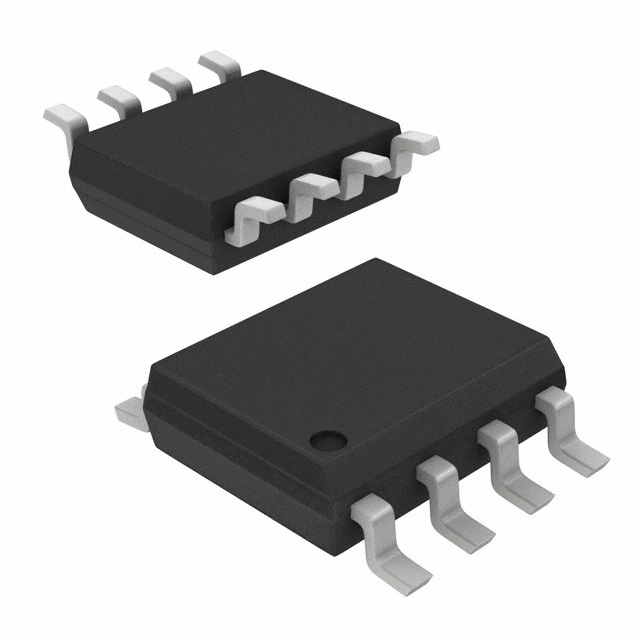
The DMP6050SSD-13 leverages a standard SO-8 surface-mount package to maximize component density on printed circuit boards. This compact footprint, with a mass of approximately 0.076 grams, directly addresses the demands of modern miniaturized systems, particularly in mobile and dimension-restricted applications. Such a slim package profile not only supports aggressive layout optimization but also lowers mechanical stress on both the device and underlying PCB during vibration or drop scenarios frequently encountered in handheld products.
Mechanically, the SO-8 package structure underscores robust lead coplanarity and body flatness, streamlining both automated optical inspection and high-speed pick-and-place assembly. The leadframe’s matte tin plating achieves consistently low contact resistance, enhancing joint integrity after solder reflow. The plating strictly adheres to MIL-STD-202, Method 208, ensuring repeatable wetting behavior with RoHS-compliant solders across varied thermal excursions. This characteristic sharply reduces the incidence of cold joints and solder cracks, mitigating latent field failures in high-cycle environments such as industrial controls or vehicle modules.
Environmentally, the DMP6050SSD-13’s Moisture Sensitivity Level 1 rating in accordance with J-STD-020 enables unlimited shelf life at ≤30°C/85% RH prior to mounting, eliminating special dry-packing processes during logistics and just-in-time inventory. The package’s stable encapsulation resists moisture ingress, reducing popcorn defect probability and delamination risks even after multiple reflow passes or extended storage. This resilience is fundamental in deployments where supply chain periods stretch or where multiple reflow steps are necessary within complex assembly schedules.
The clear and precise pin definition, with unambiguous terminal orientation, permits direct integration into standard automated placement and soldering workflows. This feature is critical in large-volume manufacturing, as it reduces set-up time, minimizes placement errors, and supports first-pass yield improvement. In practice, the reliability of lead and body referencing simplifies both incoming inspection and AOI programing, accelerating ramp-up for new designs.
Beyond compliance and manufacturability, the DMP6050SSD-13’s package characteristics reflect a concerted optimization for lifecycle durability and operational reliability. The combination of low profile, contaminant-resistant finishes, and moisture-robust encapsulation provides a measurable advantage in harsh industrial and automotive settings, where board real estate is limited and extended service lives are non-negotiable. This establishes the device not only as an electrically capable solution but as a packaging benchmark adaptable to evolving manufacturing and environmental demands.
Application Scenarios and Functional Use Cases for the DMP6050SSD-13
The DMP6050SSD-13 demonstrates a specialized design for high-demand power management, delivering robust performance where efficient switching and compact integration are essential. Its core architecture features dual P-channel MOSFETs with notably low R_DS(on), which directly supports minimized conduction losses and maximizes switching efficiency. These characteristics are particularly relevant in point-of-load DC-DC converter topologies. For systems requiring synchronous rectification or dual-path switching, utilizing both channels within a single package streamlines PCB layout and reduces parasitic elements, thereby improving overall converter response and reliability.
For advanced power path management, the dual-device structure presents an effective solution for load switching, dynamic voltage rail selection, and battery isolation. The simplicity of driving P-channel FETs in high-side configurations mitigates the need for bootstrap circuitry associated with N-channel designs. In practice, this facilitates faster design iterations, easier fault isolation, and tighter control over voltage sequencing in multi-rail environments. When optimizing for low standby power and high transient loads, the DMP6050SSD-13’s gate charge profile helps avoid unwanted shoot-through and overshoot conditions, a common priority in telecom base stations and server motherboards.
In display backlighting circuits—spanning industrial human-machine interfaces, automotive dash illumination, and precision panel arrays—the DMP6050SSD-13 supports both PWM-driven constant current sources and multiplexed LED banks. Efficient switching at moderate voltages minimizes heat generation, allowing denser layouts while maintaining thermal integrity. Proper footprint selection and copper plane design further mitigate hotspots, supported by the inherently low junction-to-case thermal resistance of the package. Observations from extensive prototyping indicate reduced derating even under cyclical heavy load, supporting higher luminance stability across varying ambient conditions.
Attention to circuit protection is critical during the integration phase. The on-state characteristics and avalanche energy rating of the DMP6050SSD-13 enable both conventional and fast-acting protection schemes against overcurrent and shoot-through. Strategic PCB placement near thermal vias and ground planes enhances heat spreading, reducing localized temperature rise and thus preserving long-term device reliability. Electromagnetic compatibility benefits are realized by minimizing loop area and applying recommended snubber networks, suppressing high-frequency emissions at the source.
Taking a broader view, the device embodies a convergence of compactness and performance previously relegated to more complex multi-package solutions. By leveraging vertical and horizontal layout flexibility, system architects can address stringent power delivery requirements in next-generation hardware, from portable medical instrumentation to edge server modules. This dual FET device offers not just incremental improvements but a shift in design possibilities, enabling streamlined manufacturing and enhanced diagnostic access for accelerated product cycles.
Potential Equivalent/Replacement Models for the DMP6050SSD-13
Evaluating alternatives to the DMP6050SSD-13 necessitates detailed analysis of both the intrinsic electrical specifications and their implications for system performance. The core consideration hinges on sourcing dual P-channel MOSFETs within the 60V, 4–5A class that support similar or superior R_DS(on) characteristics, maintaining channel efficiency and minimizing conduction losses in targeted switching applications. Device selection within this voltage and current range typically narrows the field to manufacturers with proven fabrication consistency, which mitigates batch-to-batch variance in key metrics such as input capacitance and gate charge. Preserving the SO-8 footprint is critical for layout compatibility, signal integrity, and thermal distribution, especially in designs with high power density or constrained board real estate.
Preliminary equivalence screening often leverages parametric databases to map candidate devices on R_DS(on) versus Q_g/Q_sw plots, ensuring transition performance does not introduce parasitic oscillations or timing failures in synchronous topologies. Devices like the SI9955DY from Vishay, the IRF7329 from Infineon, or NXP’s PMPB290ENE have demonstrated alignment with these characteristics. One subtle but crucial factor is the co-optimizing of switching speed and thermal capacity, as over-specifying one can introduce inefficiencies in the other—fast gates occasionally yield higher EMI, while lower thermal resistance may dictate package-level power derating.
Compliance with environmental protocols (RoHS, halogen-free) remains non-negotiable for designs destined for global deployment. Although datasheets list certifications, practical due diligence involves scrutinizing trace materials and manufacturing process shifts that can silently affect device longevity or regulatory standing. Real-world substitution often uncovers nuanced disparities in transient response: testing reveals that certain equivalents exhibit faster turn-off transitions but require minor gate resistor tuning to prevent ringing at high dV/dt. Empirical board-level thermal cycling further exposes marginal differences in junction-to-ambient resistance, directly affecting derating curves at elevated duty cycles. Thus, direct experience underscores the value of not merely matching headline specifications but also validating all thermal and timing behaviors under application-specific operating conditions.
With supply chain volatility and extended qualification timelines, flexible design choices prioritize vendors with multisource portfolios and component-level FMEA data. Early engagement with characterization samples accelerates both hardware and firmware alignment, supporting robust productization. Integrating these practices results in future-proofed designs resilient to both component obsolescence and regulatory shifts. Ultimately, strategic component selection harmonizes design reliability, lifecycle cost, and compliance—delivering deepened engineering assurance throughout the deployment horizon.
Conclusion
The DMP6050SSD-13, offered by Diodes Incorporated, constitutes a viable MOSFET selection for engineers seeking optimized performance in mid-level dual-switching power architectures. The device’s electrical parameters—low R_DS(on), balanced gate charge, and swift switching characteristics—enable efficient power conversion across high-frequency DC-DC topologies. This facilitates reductions in conduction losses and power dissipation, supporting advanced system miniaturization and higher power densities without compromising regulatory constraints or thermal limits. Its mechanical attributes, including compact SOT23 packaging, present clear advantages in PCBs where routing density and spatial constraints are nontrivial, particularly in consumer and industrial segments emphasizing size-critical solutions.
Thermal management strategies are vital when integrating the DMP6050SSD-13, as its junction-to-ambient thermal resistance and package dissipation capabilities directly influence reliability and lifecycle in demanding load profiles. Deploying advanced layout techniques—such as optimized copper pours and strategic via placement—can substantially augment heat dispersal past datasheet nominal values, thus mitigating thermal runaway risk in high cycling conditions. In practical deployments, attention to dynamic stress requirements, including repetitive avalanche energy exposure and transient intervention, ensures sustained operation under electrically noisy environments typical of backlighting drivers or energy harvesting circuits.
Environmental standards and global sourcing practices increasingly shape component selection, making the DMP6050SSD-13’s compliance with RoHS and halogen-free criteria consequential for streamlined certification workflows and future-proof design pipelines. Considering supply chain resilience, the device demonstrates versatility for rapid design iterations and procurement across distributed manufacturing platforms, reinforcing its suitability for large-scale implementation.
The design-in process benefits from modular evaluation, leveraging empirical characterization data obtained from prototyping phases. This data-driven approach refines parameter selection—gate drive strength, switching frequency, and layout configuration—yielding increased system longevity and reduced margin for error in mass production. As market requirements evolve towards higher integration and eco-efficiency, MOSFETs like the DMP6050SSD-13 will increasingly define the baseline for scalable, robust power delivery networks in modern electronics. Systems engineers are advised to synergize both component-level optimization and holistic platform integration in order to fully exploit the nuanced capabilities of this device family.