 >
>


Product overview: LD031C102JAB2A KYOCERA AVX ceramic capacitor
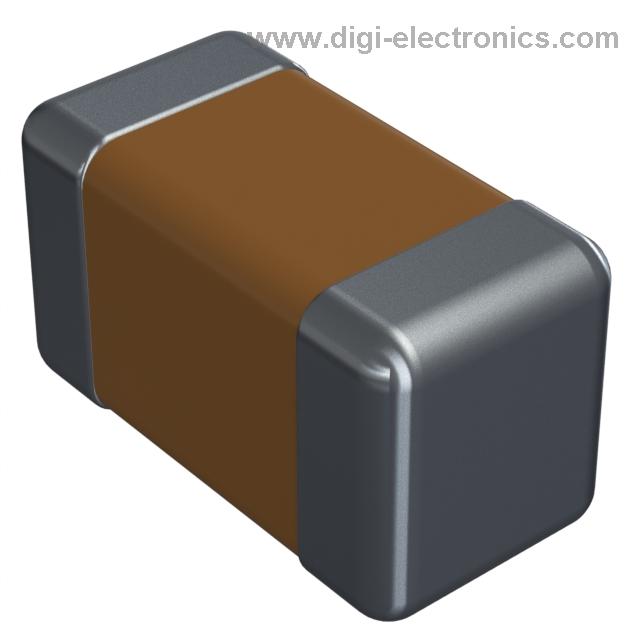
The LD031C102JAB2A, produced by KYOCERA AVX, is a surface-mount multilayer ceramic capacitor embodying a high-reliability solution for compact electronic assemblies. Designed with a nominal capacitance of 1000 pF and a rated voltage of 100V, the component utilizes X7R dielectric material, giving it a highly predictable capacitance shift across a broad temperature range from -55°C to +125°C. The construction of this capacitor leverages stacked ceramic layers and internal electrodes, optimizing volumetric efficiency while ensuring robust signal integrity in densely populated PCBs.
X7R-class dielectrics offer a stable temperature coefficient typically within ±15%, making the LD031C102JAB2A suitable for general-purpose filtering, coupling, and decoupling where moderate capacitance variation is tolerable. In real-world circuit topologies, the capacitor’s Class II dielectric enables noise suppression and pulse filtering even under fluctuating environmental conditions. The ability to maintain operational characteristics at elevated voltages and variable temperatures directly reduces failure rates in automotive, industrial, and telecom circuits sensitive to transient noise and power surges.
From an assembly standpoint, the standardized surface-mount footprint simplifies reflow soldering processes, minimizing placement errors and mitigating thermal stress during board-level integration. The multilayer design not only achieves a favorable CV (capacitance-voltage) product in a compact form factor but also limits ESR and ESL, attributes essential for minimizing parasitics in high-frequency signal chains. Experience from board bring-up phases often demonstrates the value of such capacitors as primary line-bulk filters, capable of suppressing radio-frequency interference without incurring layout penalties.
Selection of the LD031C102JAB2A supports design longevity by balancing electrical robustness, volumetric efficiency, and manufacturability. The capacitor performs reliably in critical signal paths—such as bypassing adjacent to power rails or AC-coupling in analog front-ends—where tight placement near sensitive IC pins is required. Optimizing layout to minimize trace lengths between this capacitor and high-impedance nodes further enhances transient suppression.
Engineering considerations extend to part derating, recommending operation below maximum rated voltage for added margin in harsh environments. Empirical validation across different PCB stackups frequently reveals that the X7R dielectric remains within specification both under DC bias and minor board flexure, reinforcing material and process choices. These insights underscore the capacitor’s role as an enabler in modern miniaturized electronics where assembly yield, cost, and reliability converge. The LD031C102JAB2A thus exemplifies the synthesis of material science and practical engineering for demanding surface-mount designs.
Termination and packaging details: Tin/Lead “B” termination in LD series
Termination and packaging attributes critically influence component integration and long-term reliability in high-assurance assemblies. The LD031C102JAB2A’s distinctive Tin/Lead (Sn/Pb) “B” termination, stipulated at the twelfth part-number character, denotes a finish chemistry with a minimum 5% lead content. This specification directly addresses stringent legacy and military platform requirements that mandate high reworkability, robust solder joint integrity, and immunity to tin whisker formation—concerns not always satisfied by pure-tin alternatives.
By maintaining a controlled Sn/Pb ratio, the termination enables consistent wetting and superior mechanical robustness during thermal cycling. Tin/Lead mitigates cold solder joints and minimizes microcrack propagation at the interface, directly benefiting long-service-life applications subject to sustained vibration or thermal excursions. These attributes remain critical when design teams face mixed-technology PCBA layouts or when compliance with legacy drawing specifications is non-negotiable due to recertification or retrofit constraints.
The packaging format chosen for the LD series further aligns with large-scale, automated assembly environments. Standardized carrier tape ensures seamless compatibility with high-speed pick-and-place systems, optimizing placement accuracy and minimizing handling defects. This synchronization of mechanical tolerances and ESD-safe packing streamlines incoming inspection and on-machine throughput, directly supporting quality assurance metrics and traceability documentation.
Integrating discrete Sn/Pb-terminated components into contemporary lead-free assembly lines presents nuanced process intersections. System-level designers routinely leverage these terminations in controlled-reflow segments or in hybrid soldering workflows, where the demonstrable advantages of traditional eutectic chemistry override ROHS-driven constraints. This strategic inclusion serves as an engineering risk mitigation zone, particularly for mission-critical sectors where solder joint reliability far eclipses secondary concerns over legislative compliance.
As a design observation, the persistent specification of Tin/Lead finishes in catalog architectures like the LD series implicitly reflects unresolved industry tradeoffs. While regulatory pressures trend toward pure-tin systems, the balanced retention of legacy-optimized terminations enables robust backward compatibility, facilitating smooth product transitions and extending lifecycle support for fielded assets. This ensures that procurement and production teams retain flexibility in material selection without sacrificing downstream manufacturability or reliability assurance.
Dielectric characteristics and performance: X7R attributes of LD031C102JAB2A
Dielectric characteristics significantly influence the electrical performance and reliability of multilayer ceramic capacitors, especially in variable environmental conditions. The LD031C102JAB2A incorporates X7R dielectric material, which is engineered for robust temperature stability and tightly controlled capacitance change. X7R classes are defined to restrict capacitance variation within ±15% over a temperature range from –55°C to +125°C. This specification ensures predictable behavior in circuits requiring reliable performance under thermal stress, without the necessity for the ultra-low drift associated with NP0 (C0G) materials.
At the material level, X7R leverages ceramic formulations designed to optimize ionic mobility and grain boundary structure. These mechanisms suppress excessive dielectric drift and minimize losses, supporting long-term stability in both static and dynamic applications. The composition balances high permittivity and mechanical resilience, enabling moderate to high volumetric efficiency while withstanding thermal cycling and potential board flexing during assembly.
In practical engineering scenarios, the LD031C102JAB2A finds extensive use as a decoupling or bypass capacitor in both analog and digital designs, where moderate capacitance values are necessary to filter noise or stabilize voltage rails. Its X7R dielectric can tolerate brief surges in voltage and temperature, while still maintaining its capacitance within the rated window, an essential advantage in automotive modules, industrial controls, and telecom infrastructure exposed to fluctuating ambient conditions. Notably, X7R’s characteristic response to DC bias and AC ripple must be considered during circuit design—a modest reduction in effective capacitance can occur at high operating voltages, emphasizing the value of careful derating and simulation in critical pathways.
The trade-off between stability and maximum achievable capacitance is a core consideration. While NP0/C0G dielectrics offer superior temperature invariance, their limited capacitance density earmarks them for precision timing but not bulk energy storage. X7R, as deployed in LD031C102JAB2A, fills this functional niche by providing a balanced solution, supporting tasks such as signal coupling, input/output filtering, and smoothing applications in power delivery networks. The implementation of X7R further allows for cost-sensitive scaling, facilitating high-density layouts without excessive derating.
Experience in circuit integration consistently demonstrates that the LD031C102JAB2A’s X7R profile supports reliable system performance, even in the presence of transient thermal or voltage anomalies. For engineers optimizing for lifetime reliability alongside assembly tolerances, X7R’s forgiving mechanical characteristics mitigate risks of microcracking or capacitance loss, enabling streamlined qualification workflows in volume production. Consequently, the deployment of X7R-based capacitors like LD031C102JAB2A remains a preferred approach in designs that demand a robust middle ground between stability, performance, and economic feasibility.
Electrical specifications of LD031C102JAB2A KYOCERA AVX
The LD031C102JAB2A KYOCERA AVX establishes a foundation of reliability and precision in compact MLCC form factors. Its 1000 pF capacitance, tightly held within a ±5% tolerance, directly benefits designs where channel characteristics or frequency response depend on minimized variation. This granularity supports filter integrity, timing networks, and impedance matching in RF or analog signal chains, where even marginal drift can compromise performance.
Rated for 100V DC operation, the component comfortably addresses both data path and control circuits subjected to moderate voltage swings. System designers can confidently apply the capacitor in mixed-signal boards and industrial controllers, where voltage spikes are managed but still frequent. Such a working voltage ensures compatibility with a range of power rail and signal conditioning applications, supporting integration into circuits requiring robust voltage headroom without overdesign.
Insulation resistance, measured at 10^12 Ω minimum at ambient and maintained at 10^11 Ω at 125°C, acts as a critical barrier to leakage current—a parameter essential for high-impedance analog inputs, precision references, and sensor front ends. Real-world deployment across varying thermal profiles benefits from this stable insulation resistance, as the device reliably limits error currents and prevents degradation of node potential. The consistent IR characteristics under changing temperature reflect advanced ceramic processing and precise electrode construction, aligning with high-reliability system targets.
The dielectric withstand voltage, specified at 250% of the working value, markedly elevates circuit resilience. This overvoltage tolerance provides substantial protection against switching transients, unforeseen line events, and ESD incidents common in fielded equipment. Employing this margin enables aggressive PCB layout, tight spacing, and closer proximity to noise sources without compromising isolation. In situations where downstream devices might be susceptible to temporary over-stress, this robustness affords confidence in long-term system integrity.
Component selection frameworks that prioritize predictable aging, tight statistical spread, and system-level isolation benefit markedly from the LD031C102JAB2A profile. Its feature set is highly applicable not only to traditional industrial infrastructure, such as PLCs and motor drives, but also to high-performance instrumentation and sensitive sensor interfaces, where leakage and drift can influence entire architecture outcomes. An optimal MLCC for such roles will seamlessly integrate into automated assembly lines, where repeatability and low defect rates are pivotal.
Close attention to specification interplay—capacitance tolerance, insulation resistance, and dielectric strength—reveals the underlying merit of this MLCC. By prioritizing these parameters, designs achieve greater predictability, reliability, and scalability, adapting smoothly to both incremental product changes and new-generation topologies. This approach underscores the principle that robust passive selection underpins sustained innovation in high-reliability electronics.
Physical and mechanical features: 0603 (1608 metric) package
The LD031C102JAB2A utilizes the 0603 (1608 metric) surface-mount package, aligning with global standards for miniature passive components. This form factor optimizes PCB layout density, enabling designers to implement complex circuits within constrained board outlines. The uniformity of the 0603 footprint facilitates seamless integration into high-throughput automated pick-and-place assembly lines, thereby reducing placement variance and improving overall yield during mass production. The inherent mechanical robustness of the package tolerates process stresses typical of reflow soldering cycles, preserving component integrity even under aggressive thermal profiles.
Adoption of the 0603 configuration streamlines multi-layer PCB stacking and signal routing, reducing transmission path lengths and minimizing parasitic effects. This is particularly advantageous in RF circuitry and high-speed digital designs, where careful impedance control and minimal coupling are essential. The small physical envelope supports the development of densely populated modules found in portable instrumentation, medical implants, and compact IoT nodes, where volumetric efficiency translates directly to extended functionality or reduced device dimensions.
Strategically, leveraging the 0603 package brings downstream benefits in supply chain logistics and component standardization. It eases inventory management and replacement, lowering the risk of obsolescence as the format is widely supported across vendors. Additionally, its compatibility with industry-standard assembly practices underscores its reliability for applications demanding predictable manufacturability and repeatable performance metrics. Proven by sustained field deployment, 0603 components demonstrate consistent reflow stability, maintaining solder joint reliability across diverse operational cycles. These attributes collectively address critical requirements for contemporary electronic system designs, wherein miniaturization, durability, and process reliability must coexist without compromise.
Temperature characteristics and reliability considerations for LD031C102JAB2A KYOCERA AVX
The LD031C102JAB2A, incorporating X7R dielectric technology, is engineered for stable capacitance across a broad temperature spectrum ranging from -55°C to +125°C. This thermal robustness is critical for assemblies deployed in unpredictable and varying environments, such as automotive engine compartments, base stations for telecommunications, and industrial control systems where temperature fluctuations can be both rapid and extreme. The X7R formulation minimizes the capacitance drift typically induced by temperature changes, maintaining signal integrity and predictable circuit behavior under stress conditions.
Insulation resistance further reinforces the device’s reliability profile, sustaining high resistance values even after prolonged exposure to harsh operational environments and voltage stress. This characteristic is pivotal for safeguarding sensitive circuitry, especially in mission-critical systems where a loss in insulation resistance could precipitate leakage currents, data corruption, or catastrophic failure. Long-term field deployments consistently demonstrate that superior insulation resistance directly correlates with reduced maintenance intervals and extended service lifetimes.
Mechanical integrity is elevated through the use of leaded terminations. Unlike pure tin finishes susceptible to solder joint fatigue and phenomena such as tin whisker formation—an issue exacerbated by aggressive thermal cycling—leaded terminations exhibit enhanced ductility. This property mitigates micro-cracking and prolongs mechanical interconnect reliability during successive reflow cycles or board-level rework. In practice, this ensures that components subjected to rework or repair retain both electrical and physical performance, a tangible benefit for assemblies requiring high-fidelity maintenance procedures.
System designers regularly encounter tradeoffs between capacitance stability, fortitude against temperature extremes, and reworkability. The LD031C102JAB2A’s configuration intentionally balances these variables, reducing downstream risk in certification processes for safety and durability. Through intelligent material selection and termination engineering, the device aligns closely with the demands of increasingly compact, high-density designs, where thermal and mechanical overstress are recurrent concerns. This nuanced synergy between dielectric chemistry, electrode integrity, and package design typifies modern advances in capacitor reliability, providing a template for robust passive component selection in sophisticated electronic systems.
Compliance and application suitability: LD031C102JAB2A KYOCERA AVX
Compliance and application suitability for LD031C102JAB2A KYOCERA AVX require a precise understanding of regulatory environments and operational demands. LD031C102JAB2A, a multilayer ceramic capacitor, features leaded terminations by design, rendering it non-compliant with RoHS directives aimed at hazardous substance reduction. The inclusion of lead addresses critical reliability factors in high-stress environments, directly supporting legacy systems and defense infrastructure where material consistency and proven termination processes are non-negotiable. Leaded finishes mitigate the growth of tin whiskers and associated failure modes, providing stable contact interfaces essential for mission-critical hardware.
Industry specifications, notably for aerospace and military applications, often stipulate the use of lead-bearing components. This ensures backward compatibility and interfaces seamlessly with maintenance chains accustomed to established qualification standards. When RoHS or lead-free exemptions are in place, the LD031C102JAB2A integrates smoothly into approved EEE (Electrical, Electronic, and Electromechanical) parts lists, streamlining qualification and obsolescence management. This preempts disruptive redesigns and preserves system performance profiles, directly translating to reduced lifecycle risk and accelerated program timelines.
Within procurement and engineering workflows, balancing regulatory adherence with system longevity forms the core of part selection. Components like LD031C102JAB2A are prioritized where the cost of failure or deviation from legacy requirements far exceeds potential environmental compliance penalties. The intrinsic reliability advantages of leaded terminations have been repeatedly validated under extended-temperature cycling, vibration, and high-reliability test regimes, reinforcing their adoption in platforms such as avionics, tactical communications, and long-duration orbital assets.
Real-world integration underscores an essential lesson: compliance is not absolute but contextual. In sectors governed by high-reliability mandates and slow technology adoption cycles, components exempt from RoHS restrictions sustain supply chain predictability and ease of qualification. Here, technical decisions pivot on risk minimization and interface continuity rather than aligning with generic green manufacturing policies. Such nuanced decision-making ensures that engineering intent and operational requirements maintain priority over bulk regulatory momentum, ultimately securing both program objectives and system durability.
Potential equivalent/replacement models for LD031C102JAB2A KYOCERA AVX
Potential replacement models for LD031C102JAB2A from KYOCERA AVX should be identified by closely analyzing the component's detailed characteristics, with particular emphasis on capacitance-voltage (CV) profiles, dielectric formulation, termination style, and package footprint compatibility. In typical cross-selection processes, initial attention is paid to alternate MLCCs in the LD03 and LD04 series. These series maintain congruent mechanical dimensions and X7R dielectric stability across temperature, supporting consistent impedance profiles in diverse operating environments. Critical evaluation of termination type remains essential—models deploying the “B” tin/lead finish ensure robust solder joint formation and extended reliability, particularly in applications governed by legacy standards or where mitigation of tin whisker risk is prioritized. These attributes are often vital in high-reliability fields such as industrial automation, avionics, and medical instruments, where qualification cycles are stringent and component substitutions must not introduce unmodeled variables.
Expanding the selection scope, general-purpose X7R 0603 MLCCs from reputable global manufacturers may serve as substitutes when system legacy constraints are relaxed. However, equivalence at the electrical level alone does not guarantee functional parity. Thorough comparison of insulation resistance, ESR, and DC bias behavior under operating voltage is necessary to avoid latent performance issues. For instance, variations in capacitance drop-off under DC bias among vendors can affect filter stability in power supply rails. Attention to derating practices is also critical; MLCCs are often operated below rated voltage to suppress microcracking and thermo-mechanical failure, so matching both nominal and surge ratings is recommended. Termination composition and board assembly process compatibility should be validated to preclude solder wicking or brittle fracture during reflow, ensuring long-term reliability.
Empirical selection experiences reinforce that aligning manufacturer qualification, environmental performance ratings, and supply chain resilience with technical fit is instrumental during MLCC substitution. Even seemingly interchangeable models can yield disparate field performance, especially in circuits subjected to thermal cycles and high-frequency transients. Vendor-provided cross-reference lists offer a helpful starting point, yet direct review of datasheets and, where applicable, pre-qualification testing in the application context reduces risk of over-reliance on general specifications. By emphasizing the holistic fit to both electrical and mechanical system requirements, teams can maintain system integrity while navigating component obsolescence or supply interruptions.
Conclusion
The LD031C102JAB2A KYOCERA AVX ceramic capacitor exemplifies a synthesis of rigorous electrical specifications, stability in termination method, and a design philosophy centered on operational dependability. At its core, the class II dielectric offers well-balanced capacitance with highly controlled temperature and voltage characteristics, ensuring tolerances meet stringent circuit integrity demands. The “B” termination, alloyed with tin/lead, is specifically engineered for environments where mitigation of tin whisker formation and legacy solderability are non-negotiable—common in aerospace and defense applications where both the longevity and fleet consistency of electronic assemblies are paramount.
Electromechanical reliability is further amplified by multilayer construction, which optimizes volumetric efficiency without compromising insulation resistance or voltage endurance. The compact case format and standardized tape-and-reel packaging directly address the needs for automated high-speed placement in densely populated PCB layouts, reducing handling defects and improving throughput. Compliance with established industrial standards, such as RoHS exemptions for leaded terminations, ensures that deployment remains flexible across a spectrum of legacy platforms while supporting smooth transitions during procurement cycles that might span mixed soldering technologies.
Experience identifies the LD031C102JAB2A as a preferred fit where risk minimization is prioritized over marginal cost savings, particularly for revision-controlled designs or assemblies exposed to regular thermal cycling and mechanical stress. When evaluating competitive substitutes, detailed analysis of dielectric system stability, termination chemistry, and package robustness reveals layered differentiation—not all alternatives measure equally against these critical points, especially in extended qualification programs that test for microcracking, long-term capacitance drift, and solder joint fatigue.
A key insight in product selection arises from viewing capacitors not merely as passive elements, but as fundamental determinants of system safety and repeatability. The engineering-focused approach aligns LD031C102JAB2A with applications that cannot tolerate inconsistent performance or supply chain disruptions. This perspective drives a comprehensive assessment where dielectric formulation, termination integrity, and compliance positioning converge to deliver optimized total lifecycle value, positioning the component as a cornerstone within high-density, high-reliability circuit architectures.