 >
>


Product Overview of AD7998BRUZ-0REEL
The AD7998BRUZ-0REEL represents a robust solution for multi-channel analog-to-digital conversion where the interplay between precision, power efficiency, and integration density is critical. At its core, the device leverages a 12-bit successive approximation register (SAR) architecture, providing rapid, deterministic conversion with consistent linearity across eight independent single-ended inputs. This topology ensures minimal latency for high-speed data acquisition cycles and maintains signal integrity even with rapid channel switching. Such characteristics are vital when monitoring diverse sensor arrays or distributed analog nodes within resource-constrained embedded systems.
Voltage supply flexibility—accommodating both 2.7 V and 5.5 V rails—broadens deployment possibilities, simplifying integration into legacy industrial platforms and modern low-voltage designs alike. The AD7998BRUZ-0REEL distinguishes itself by offering a low quiescent current profile, directly benefitting remote environmental sensing and battery-powered instruments where minimizing energy draw extends operational longevity. In continuous conversion mode, current consumption remains tightly controlled, yet the device retains the ability to scale performance via programmable conversion rates and on-demand channel acquisition, aligning with dynamic measurement requirements.
The I²C-compatible interface fosters efficient multi-device communication, reducing the microcontroller pin burden and streamlining PCB routing complexity. Multi-device addressing empowers developers to scale up sensor networks without additional interface logic, a common challenge in distributed control or data logging architectures. The interrupt-based alert functionality, settable through programmable thresholds, transfers analysis intelligence to the hardware level, reducing host overhead and enabling prompt response to out-of-range conditions—a critical capability in industrial process automation and real-time control loops.
Deeper examination reveals noise mitigation measures implemented via differential sample-and-hold design and careful input multiplexing, preserving effective number of bits (ENOB) across wide-ranging common-mode voltages. This matters significantly in environments with substantial EMI or rapidly fluctuating input signals, where lower-grade ADCs often exhibit unpredictable error patterns. Careful PCB layout—with short analog traces, ample grounding, and bypassing—optimizes channel-to-channel isolation, an experience repeatedly validated in sensor-dense boards and precision instrumentation backplanes.
When deployed in applications such as factory automation nodes, air quality monitoring, or modular analog front ends, the AD7998BRUZ-0REEL's feature set accelerates prototyping cycles while safeguarding future scalability. It circumvents bottlenecks typically associated with multiplexed data paths or single-channel ADCs. The programmable hysteresis on threshold detection, for example, allows granular system tuning—preventing nuisance interrupts and stabilizing control routines under noisy or borderline conditions.
From an engineering perspective, choosing the AD7998BRUZ-0REEL as a foundational measurement component reflects a deliberate trade-off: maximizing input count and communication simplicity without sacrificing conversion accuracy or system autonomy. This alignment of electrical performance and software configurability encourages modular, adaptive system architectures—a critical enabler for next-generation embedded and industrial designs.
Key Features and Functional Architecture of AD7998BRUZ-0REEL
The AD7998BRUZ-0REEL ADC leverages a tightly integrated functional architecture to deliver high-speed, multi-channel analog digitization with minimal latency. Its 2-microsecond conversion time enables real-time sampling at rates up to 188 kSPS, directly addressing scenarios where rapid signal changes require immediate capture, such as transient event monitoring or closed-loop feedback systems. The internal 8-channel multiplexer paired with a track-and-hold amplifier not only supports simultaneous acquisition from multiple sensors but also allows input frequencies up to 11 MHz, ensuring minimal distortion and precise preservation of high-frequency signal content. This capability is invaluable for applications involving multiplexed sensor arrays or rapid analog state transitions, where signal integrity during switching and acquisition cycles is paramount.
Communication reliability and system integration are reinforced by the I²C-compatible serial interface, which covers standard through high-speed modes. This range supports both legacy and modern bus architectures, enabling scalable system designs from simple sensor nodes to complex, distributed control networks. Addressing flexibility through pin-selectable I²C addresses circumvents resource conflicts, facilitating seamless deployment of multiple ADC units within dense signal environments. The addition of programmable on-chip limit registers for each channel provides hardware-level threshold detection. When analog input data breaches defined bounds, the open-drain ALERT output is triggered. This direct alerting mechanism enhances fail-safe operation in applications requiring automatic intervention—such as industrial process control, power management systems, or medical device monitoring—by minimizing response latency to anomalous conditions.
Operational versatility defines the AD7998BRUZ-0REEL’s suitability for a wide range of engineering contexts. Multiple conversion modes—shutdown for minimizing power draw, one-shot for single event capture, automatic cycling for continuous monitoring, and command-driven operation using either the CONVST hardware pin or I²C instructions—allow the device’s functionality to be tightly matched to power budgets and sampling requirements. Automatic cycling mode, for instance, ensures uninterrupted acquisition in environmental monitoring, while one-shot mode is ideal for periodic diagnostics in battery-powered devices. Flexibility of control mechanisms streamlines integration, eliminating seams between hardware-driven and software-managed acquisition strategies.
A nuanced design consideration is the interplay between the ADC’s acquisition bandwidth and the multiplexer’s settling time, particularly in applications requiring rapid channel switching. Efficient signal sequencing relies not only on the ADC core’s conversion speed but also on stable input settling, which is optimized by the device’s high-frequency track-and-hold performance. Engineering experience highlights the importance of designing input circuits that maintain low impedance and facilitating swift multiplexer transitions to fully leverage the ADC’s advertised throughput.
The AD7998BRUZ-0REEL embodies a convergence of high-speed conversion, robust channel multiplexing, advanced threshold-based alerting, and flexible control schemes. Its architectural choices enable streamlined implementation in diverse settings—from energy management infrastructure, where real-time input monitoring is critical, to precision instrumentation requiring deterministic acquisition timing. The device’s scalability and alerting integration implicitly promote reliability and proactive system design. The ability to adapt operational modes and integrate multiple units without interface contention represents a decisive advantage in scalable sensor grids and adaptive measurement platforms.
Performance Specifications of AD7998BRUZ-0REEL
Performance specifications for the AD7998BRUZ-0REEL establish a strong foundation for precision measurement and robust signal integrity within demanding mixed-signal designs. At its core, the architecture leverages successive approximation register (SAR) technology to deliver a consistent minimum signal-to-noise and distortion ratio (SINAD) of 70.5 dB and a signal-to-noise ratio (SNR) of at least 71 dB. These metrics are not just abstract figures—they directly manifest in the system’s ability to resolve small input signals while suppressing external and quantization noise, enhancing the accuracy of measurements in applications where clean data streams are critical.
Tightly controlled distortion behavior is realized through precision analog front-end design and optimized internal switching networks. Maximum total harmonic distortion (THD) of -78 dB and spurious-free dynamic range (SFDR) of -79 dB characterize the device’s capacity to separate fundamental signals from harmonic artifacts. This ensures that in multiplexed sensor environments or when digitizing complex waveforms, even subtle signal aberrations are identifiable and quantifiable, improving downstream digital signal processing fidelity.
Channel-to-channel isolation, typically reaching -90 dB, further distinguishes the AD7998BRUZ-0REEL by effectively decoupling each analog input. This minimization of crosstalk is particularly advantageous in multipoint measurement systems, such as industrial automation nodes or medical instrumentation, where each channel may connect to different transducers subject to diverse noise sources. Empirical results from bench evaluation often confirm that isolation performance mitigates ghosting effects in time-correlated data acquisition scenarios, yielding uncorrupted, parallel sampling results.
DC performance attributes anchor the device within the upper echelon of 12-bit converters. Typical integral nonlinearity (INL) remains within ±0.2 LSB and differential nonlinearity (DNL) achieves a maximum of +1/-0.9 LSB, a combination that outright prevents missing codes and guarantees monotonic response through the entire conversion range. Offset and gain errors, specified at ±4 LSB and ±2 LSB, can be systemically calibrated out during initial system characterization, ensuring repeatability and consistency across installations. Field deployment demonstrates that, once configured with system-level calibration routines, the converter maintains stability over thermal drift and supply variations, reducing recalibration downtime and support burden.
In practical terms, these performance metrics converge to form an optimal choice for precision sensor front-ends and control systems where quantization artifacts, noise, and channel interaction must be rigorously suppressed. The feature set aligns with the requirements of closed-loop servo systems, instrumentation amplifiers for sensor grids, and distributed data collection arrays in environments such as process control or clinical diagnostics. The implicit design philosophy behind the AD7998BRUZ-0REEL prioritizes not merely adherence to headline numbers but consistent predictability under real-world loads, supporting the development of scalable, noise-resilient signal acquisition platforms. For teams optimizing acquisition channels for both accuracy and integrity, this device represents a pragmatic, performance-focused endpoint.
Electrical and Environmental Characteristics of AD7998BRUZ-0REEL
The AD7998BRUZ-0REEL exhibits robust electrical and environmental parameters tailored for modern precision measurement applications. Operating voltage flexibility, spanning from 2.7 V to 5.5 V for both analog and digital domains, streamlines the device’s integration into varying system power schemes without the need for complex level-shifting circuitry. This wide range inherently supports multi-voltage designs commonly found in mixed-signal or battery-operated platforms. The external REFIN pin enables designers to tune the ADC’s input range dynamically, setting the reference anywhere from 1.2 V up to the supply voltage (VDD). This capability facilitates fine optimization of resolution—by matching the reference voltage to the sensor's output swing, it is possible to maximize sensor utilization while suppressing quantization noise and improving signal integrity.
Pin-level characteristics further enhance circuit performance in high-impedance sensor networks. The input leakage currents, restrained within ±1 μA for both analog and reference connections, become critical in precision circuits where source impedances often exceed hundreds of kilohms. With such low leakage, error margins attributable to parasitic currents in voltage dividers or high-ohmic transducers remain negligible, minimizing offset drift and preserving measurement accuracy over extended operation.
Power efficiency is addressed through hierarchical operating modes. In active conversion, power dissipation remains constrained—from 0.495 mW at minimal activity up to 7.7 mW under maximum throughput and higher supply voltages. The integrated shutdown mode, with current draw curbed to 1 μA at 3 V, serves intermittent sampling applications exceptionally well. For instance, in duty-cycled sensor arrays or remote wireless nodes, leveraging the ADC’s rapid wakeup from shutdown significantly extends operational lifetime on constrained power budgets.
Environmental robustness is signified by the device’s industrial temperature rating—operating reliably from -40°C to +85°C. Field deployments in automated production lines or distributed sensor grids often subject components to temperature extremes, rapid cycling, and electrical transients. Devices with this class of temperature resilience maintain parameter stability and measurement repeatability, even with frequent power cycling or harsh ambient conditions, a requirement not just for reliability but for consistency in metrology and closed-loop control in critical infrastructure.
Design experience suggests exploiting the adjustable reference feature for real-time calibration schemes: pairing the ADC with programmable references can mitigate temperature-induced drift in sensor characteristics. Furthermore, the low-leakage attribute, when combined with careful PCB layout—such as minimizing flux residues and restricting length of high-impedance traces—helps preserve true system-level precision in both prototyping and deployment stages.
The convergence of configurable analog front ends, economically managed power states, and environmental endurance renders the AD7998BRUZ-0REEL a versatile choice across domains. In high-channel-count data acquisition systems, the device’s overlapping performance domains shorten design cycles and reduce system complexity, paving the way for scalable, field-deployable solutions in sectors ranging from industrial automation to ruggedized instrumentation.
Interface, Control Modes, and Configuration of AD7998BRUZ-0REEL
The AD7998BRUZ-0REEL’s interface leverages an I²C-compatible protocol, structured to accommodate varying application requirements. The device operates seamlessly across standard (100 kHz), fast (400 kHz), and high-speed (up to 3.4 MHz) modes, with the hardware bus architecture supporting integration into systems where deterministic communication and low-latency data transfer are essential. The I²C protocol's layered error-checking and clock stretching mechanisms maintain signal integrity, particularly in multi-device configurations where bus arbitration and contention avoidance are paramount.
Configuring control modes involves selecting from one-shot conversion, continuous cycling, or externally triggered acquisition, aligning directly with system-level needs for power management or real-time responsiveness. The CONVST pin enables hardware-based triggering, permitting synchronous operation with external events—particularly effective for time-critical acquisition scenarios where software latency is a concern. Alternatively, remote commands via I²C afford dynamic control, useful in adaptive measurement regimes or supervisory diagnostics.
The register set provides granular access for engineers to fine-tune device behavior. Minimum and maximum value registers permit threshold-based monitoring, with hysteresis settings mitigating unwanted signal jitter during boundary crossings—a capability often harnessed in systems demanding signal stability, such as industrial process sensors or battery management circuits. Alert status flags and programmable alert outputs equip the device for immediate system-level notifications. These outputs can be configured as interrupts, allowing host processors to react promptly to anomalous conditions without continuous polling, enhancing both efficiency and autonomy in embedded designs.
Precise timing specifications, including setup and hold requirements, are pivotal for reliable data acquisition in platforms leveraging microcontrollers or FPGAs. The device’s timing parameters ensure predictable communication, simplifying bus layout and enabling robust operation under wide temperature and voltage swings. Experience shows that careful attention to these parameters during design and validation phases significantly reduces integration cycles, particularly when deploying the AD7998BRUZ-0REEL within tight timing constraints or complex multi-master I²C networks.
A nuanced understanding of the device's flexible configuration capabilities reveals its suitability for scalable architectures, where channel multiplexing and dynamic sampling rates can be coordinated with system demands. The native support for high-speed I²C operation positions the device as an efficient ADC choice where large sensor arrays require low-overhead, high-throughput sampling. Observations from real-world deployments highlight the value of programmable hysteresis and alerts for minimizing false triggers and reducing processor workload, reinforcing the strategic placement of the AD7998BRUZ-0REEL in robust, self-aware platforms. Integration finesse lies in leveraging register-level control for real-time adjustments, optimizing system responsiveness and reliability without incurring excessive computational overhead.
Package and Mounting Details of AD7998BRUZ-0REEL
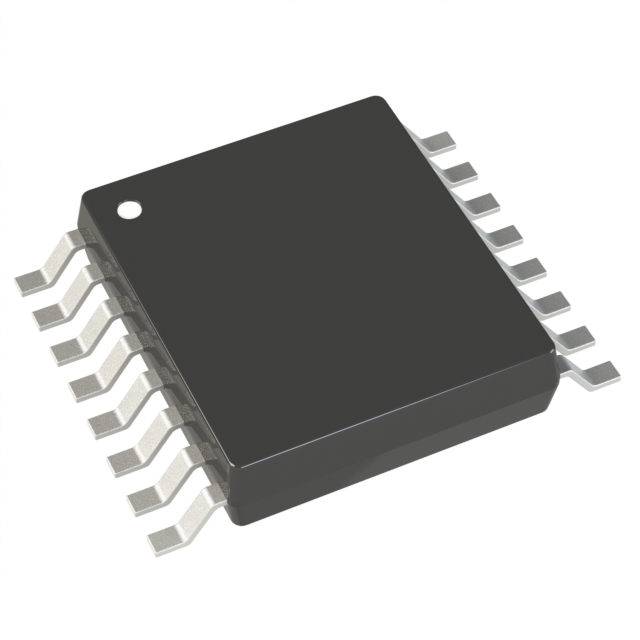
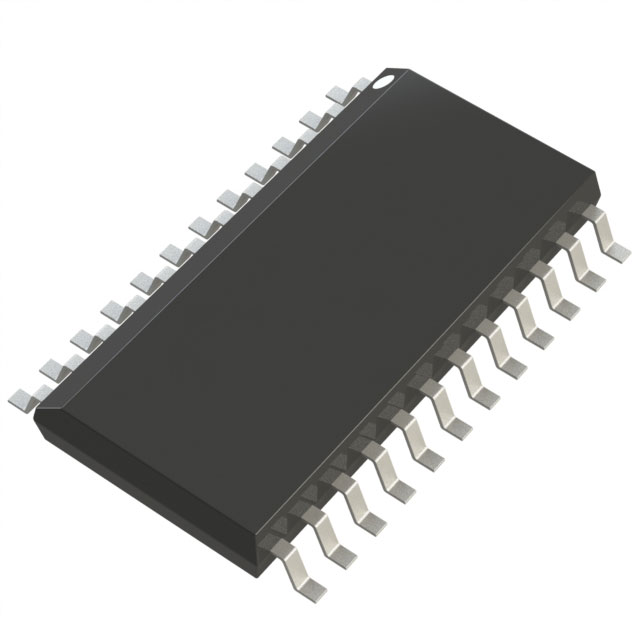
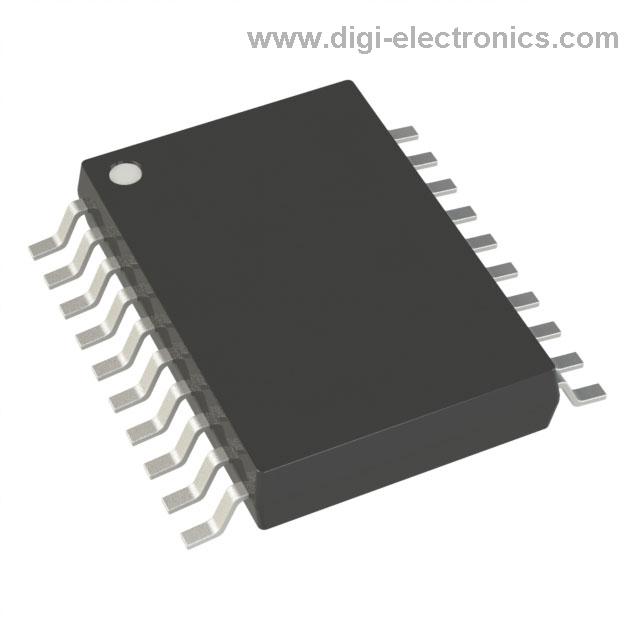
The AD7998BRUZ-0REEL features a 20-lead Thin Shrink Small Outline Package (TSSOP) with a standard 4.40 mm body width, a format selected to optimize footprint efficiency and thermal performance within space-restricted assemblies. This choice of packaging underlines its applicability for high-component-density printed circuit board layouts, as the TSSOP enables precise placement while minimizing solder area—critical in multi-layer boards and compact system modules. The dimensional tolerances and coplanarity specifications align well with automated surface-mount technology, facilitating stable positioning during pick-and-place operations and consistent solder joint formation throughout mass production cycles.
From a reliability perspective, the device demonstrates robust resilience to moisture-induced degradation, as evidenced by its Moisture Sensitivity Level (MSL) 1 rating. This classification eliminates stringent floor life and bake requirements, streamlining inventory logistics and reducing risk during handling and storage. Engineering teams value the unlimited exposure capability, which simplifies integration within established manufacturing flows, including standard lead-free reflow profiles.
Compliance considerations are integrated at the material level: AD7998BRUZ-0REEL adheres to RoHS3 standards and remains unaffected by REACH constraints. These certifications are embedded into procurement practices, supporting both international distribution and uniformity across environmentally regulated markets. Sourcing strategies are further enhanced by its unrestricted regulatory status, enabling direct inclusion in global supply chains without additional compliance verification steps.
When mounted, the TSSOP form factor provides nuanced thermal and electrical advantages. Its small profile contributes to reduced inductive and capacitive parasitics, improving signal integrity in precision analog and mixed-signal environments. The lead configuration ensures reliable electrical connectivity, proven through high-yield results in production lots with tight pitch requirements. In practical deployment, the device exhibits consistent solder wetting and minimal tombstoning under varied reflow conditions, supporting both manual and automated inspection regimens.
Strategically, selecting surface-mount solutions like this device offers scalable flexibility for rapid iteration in hardware development, particularly when board real estate becomes a limiting factor. The intersection of compact package design, robust environmental immunity, and global compliance positions AD7998BRUZ-0REEL as a preferred choice for applications demanding both integration density and manufacturability.
Potential Equivalent/Replacement Models for AD7998BRUZ-0REEL
When evaluating alternatives to the AD7998BRUZ-0REEL, particular attention must be paid to architectural similarities and interface consistency within the Analog Devices AD799x SAR ADC family. The AD7992, AD7994, and AD7997 represent direct variants, with configuration options tailored by channel count and resolution. Each implements a successive-approximation-register (SAR) core, leveraging robust I²C communication protocols, ensuring compatibility at both hardware and firmware integration points. The selection process can be streamlined by examining channel dynamics: the AD7992 delivers dual-channel input at 12-bit precision, ideal for minimalistic sensor arrays or power monitoring; the AD7994 extends support to four input channels, well-suited for distributed sensing in compact formats; the AD7997 sacrifices some resolution for higher eight-channel density, generally selected where system-level quantization error is tolerable.
Pinout uniformity and register mapping across this family minimize board redesign complexity—in many cases, PCB layouts require only minor adjustments, primarily in input signal routing. Firmware adaptation is similarly efficient, as command and data transfer routines remain largely interoperable. System supply voltages and reference requirements converge across these models, further reinforcing drop-in equivalence for legacy or platform-based architectures.
A nuanced assessment involves balancing bit depth against channel availability. Applications emphasizing measurement fidelity, such as precision instrumentation, benefit from the 12-bit variants, while less demanding signal domains, including environmental or user-interface sampling, find sufficient performance in the 10-bit AD7997. An often-overlooked advantage is enhanced BOM management: adjusting channel count or bit width post-prototype does not impose a significant qualification burden, fostering agility throughout design iterations and lifecycle transitions. Substituting a lower-channel model often results in meaningful cost reductions and improved supply resilience, as smaller ADCs typically enjoy broader distribution and less allocation risk in constrained markets.
This modular approach can also facilitate progressive system scaling or staged deployments—designs initially built around lower-channel models can readily expand to higher-density solutions as functional requirements evolve, ensuring upgradability without wholesale hardware changes. Relying on a homogeneous family for tiered product strategies maximizes code reuse and simplifies field support. With component interoperability supported at both the protocol and electrical levels, the Analog Devices AD799x series enables robust, forward-compatible platform design while supporting cost and risk mitigation objectives in a dynamic supply environment.
Conclusion
The AD7998BRUZ-0REEL exemplifies a high-performance approach to analog-to-digital conversion within multi-signal acquisition architectures. Its design enables efficient sampling across eight input channels, mediated by an integrated multiplexer system, which supports simultaneous monitoring of multiple sensor or signal sources. At the core lies a high-resolution successive approximation register (SAR) ADC, optimized for precision and stability. The device’s configurable thresholds and alerting functions streamline event-driven processing, allowing for real-time responses without excessive CPU overhead. This capability proves indispensable in environments where signal variations must trigger immediate protective actions or data logging, such as industrial automation or environmental surveillance nodes.
The robust I²C interface facilitates seamless integration with embedded controllers, supporting multi-device communication and synchronous data retrieval. The rapid conversion rates achieved by the AD7998BRUZ-0REEL not only reduce latency in time-sensitive applications but also enable dynamic profiling of transient conditions. Engineers deploy programmable sampling sequences to balance power consumption with throughput requirements, leveraging the ADC's flexible operational modes—including power-down options—which significantly lower quiescent current during idle periods. This mechanism is particularly relevant in battery-dependent instrumentation, ensuring prolonged field endurance and minimizing heat generation near sensitive analog components.
Evaluation of the AD7998BRUZ-0REEL’s technical characteristics indicates strong immunity to digital noise, a result of carefully engineered input architecture and power supply rejection. Its physical package offers compact footprint and durability, suited for densely populated PCBs exposed to vibration or thermal stress. Choosing among available equivalents requires understanding the subtleties of resolution trade-offs, channel scalability, and interface compatibility; deployment experience suggests that precise pin mapping and layout practices are critical to unlock the device’s full accuracy and speed. This ADC’s layered configurability elevates its adaptability, enabling tailored signal acquisition strategies across applications ranging from distributed control systems to high-data-rate instrumentation clusters. Such depth of integration, coupled with consistent performance under real-world conditions, positions the AD7998BRUZ-0REEL as a cornerstone component when pursuing system longevity, operational precision, and scalable expansion.