


Refrigerator amps are a key indicator of how much electrical current your appliance needs to operate efficiently and safely. Understanding this value helps you select the right circuit, estimate energy usage, and prevent electrical issues. This article explains typical amp ranges, influencing factors, and practical ways to measure and manage refrigerator power consumption.
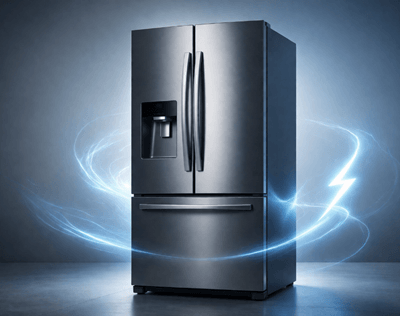
Refrigerator Amps Overview
Refrigerator amps refer to the amount of electrical current a refrigerator draws to operate its compressor and cooling system. This current is measured in amperes (A). Because the compressor cycles on and off to maintain the set temperature, the current draw is not constant. In simple terms, refrigerator amps indicate how much current the appliance needs to run properly, including both normal operation and brief startup surges.
Refrigerator Amps by Type and Factors
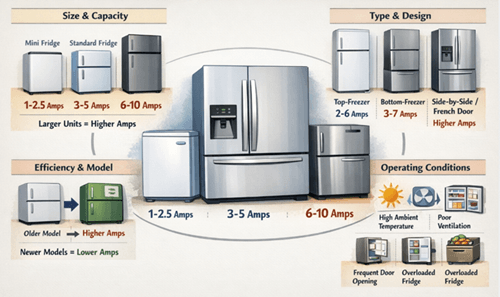
Refrigerator current varies depending on size, design, efficiency, and operating conditions. Larger units require more power to cool greater internal volume, while advanced features and environmental factors can increase overall electrical demand.
Size and Capacity
Refrigerator size directly affects amperage because larger units require more energy to maintain cooling. Mini refrigerators typically draw about 1 to 2.5 amps due to their compact size. Standard household refrigerators usually operate within 3 to 5 amps, offering a balance between capacity and efficiency. Larger or double-door units often require 6 to 10 amps to maintain a consistent temperature across multiple compartments.
Type and Design
The internal layout influences efficiency and current draw. Top-freezer models are generally more efficient, typically using around 2 to 6 amps, as cold air naturally flows downward. Bottom-freezer models may consume slightly more power due to less natural airflow. Side-by-side and French door refrigerators usually draw higher current because of their larger size and added features like ice makers and water dispensers.
Efficiency and Model
Energy efficiency plays a major role in amperage. Older models tend to draw more current due to less efficient compressors and insulation. Modern energy-efficient refrigerators can reduce current consumption by about 10–20% while maintaining the same cooling performance.
Operating Conditions
Actual conditions also affect current usage. Higher ambient temperatures increase compressor runtime, leading to higher energy use. Poor ventilation, frequent door opening, and overloading the refrigerator can also increase current draw. Proper placement and usage help maintain stable and efficient operation.
Typical Refrigerator Amps Table
| Refrigerator Type | Running Amps | Startup Surge Amps |
|---|---|---|
| Mini / Compact | 1 – 2.5A | 3 – 7.5A |
| Top/Bottom Freezer | 3 – 6A | 9 – 18A |
| Side-by-Side | 5 – 9A | 15 – 27A |
| French Door | 6 – 10A | 18 – 30A |
| Commercial Units | 10A+ | 30A+ |
Startup surge is brief but important, and the electrical circuit must handle this peak.
How to Calculate and Measure Refrigerator Amps
Basic Electrical Formula
Amps can be calculated using the relationship between power, voltage, and current:
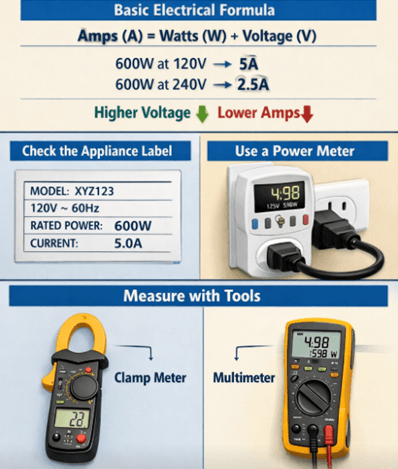
Amps (A) = Watts (W) ÷ Voltage (V)
For example:
• 600W at 120V → 5A
• 600W at 240V → 2.5A
A 600W refrigerator uses about 5A on a 120V supply and about 2.5A on a 240V supply. This shows that for the same power level, higher voltage results in lower current. The formula is useful for quick estimation, especially when the wattage is listed but the amp value is not.
Check the Appliance Label
The easiest way to identify expected current is to check the refrigerator nameplate or rating label. It is usually located at the back, inside the fresh food compartment, or near the door frame. Most labels show voltage and either watts or amps, which makes it possible to confirm the electrical requirement without calculation.
Measure Actual Current
A plug-in power meter is a simple way to check real-time current in normal household use, while a clamp meter provides a safer direct measurement without touching internal wiring. A multimeter can also measure current, but it requires proper setup and greater care. In actual operation, the reading will change with temperature, load, and compressor cycling.
Refrigerator Watts, Amps, Startup Current, and Energy Use
Understanding refrigerator amps alone is not enough. To evaluate real electrical demand, it is necessary to consider how amps, watts, startup current, and energy consumption work together.
Electrical power is defined by the relationship between voltage, current, and power:
Watts = Volts × Amps
While amps show the current draw, watts reflect the total power required during operation, which is more useful when selecting generators, inverters, or backup systems.
Refrigerators do not draw constant current. During normal operation, they use running current to maintain temperature. However, when the compressor starts, a short surge known as startup current occurs. This startup current is typically two to three times higher than the running current, even though it lasts only a few seconds. This is why power systems must be sized to handle peak demand, not just average operation.
In addition to power and current, energy consumption is measured in kilowatt-hours (kWh), which reflects how much electricity is used over time. For example, a 150W refrigerator running about 40% of the day consumes approximately:
150W × 24h × 0.4 = 1.44 kWh/day
In practice, actual energy use depends not only on the power rating, but also on compressor runtime, ambient temperature, and door opening frequency.
Power Supply and Electrical Requirements
Generator or Inverter Use
A power source must handle both running power and startup surge. A common recommendation is a capacity of 2–3 times the running watts.
• Example: A 600W refrigerator may require a 1200–1800W inverter.
Circuit Requirements
Refrigerators should be connected to a dedicated 15–20A circuit to prevent overload and ensure stable operation. Avoid sharing the circuit with high-power appliances.
Troubleshooting High Current Issues
Signs of High Current Problems
• Frequent breaker trips
• Overheating plug or wiring
• Unusual compressor noise
• Sudden increase in electricity bills
Possible Causes
• Dirty condenser coils
• Poor ventilation
• Faulty compressor
• Electrical supply issues
Conclusion
Understanding refrigerator amps goes beyond knowing a number; it ensures safe operation, proper power supply sizing, and better energy efficiency. By considering size, design, and conditions, you can accurately assess current requirements and avoid common issues. Applying these insights helps extend appliance lifespan, reduce costs, and maintain reliable, stable performance over time.
Frequently Asked Questions [FAQ]
How many amps does a refrigerator use on a 220V or 240V supply?
Refrigerators draw fewer amps on higher voltage. For the same wattage, current is lower—for example, a 600W fridge uses about 5A at 120V but only 2.5A at 240V. Always check the appliance label to match voltage requirements.
Can a refrigerator run on an extension cord safely?
It is not recommended. Extension cords can cause voltage drops and overheating, especially during a startup surge. If necessary, use a heavy-duty cord rated for at least 15–20 amps and keep it as short as possible.
What size breaker is best for a refrigerator?
Most refrigerators require a dedicated 15–20-amp circuit breaker. This ensures the circuit can handle both running current and startup surge without tripping or causing electrical stress.
Does a refrigerator use more amps when it is full or empty?
A full refrigerator is generally more efficient and may use slightly fewer amps. Stored food helps maintain internal temperature, reducing compressor workload compared to an empty unit.
Why does my refrigerator trip the breaker even if the amps seem normal?
Breaker trips can occur due to startup surge, faulty wiring, a weak breaker, or compressor issues. Even if running amps are normal, the brief surge current or electrical faults can exceed circuit limits.


